
Reduce High Maximum Demand(MD) Charges With Our BESS Solutions
Unlock energy independence and commercial performance
with Maqo Solar’s advanced Battery Energy Storage Systems (BESS).
Recently Realized Your TNB Bill Became So Much Higher? Why Is That?
When most business owners review their electricity bills, they look at how much energy they've consumed in kilowatt-hours. But there's another charge that has been quietly growing into one of the biggest items on the bill for medium and high voltage users: Maximum Demand (MD) charges.
In July 2025, TNB overhauled its tariff structure — and the effect on MD charges was significant. Here's what shifted across the main commercial and industrial tariff categories:
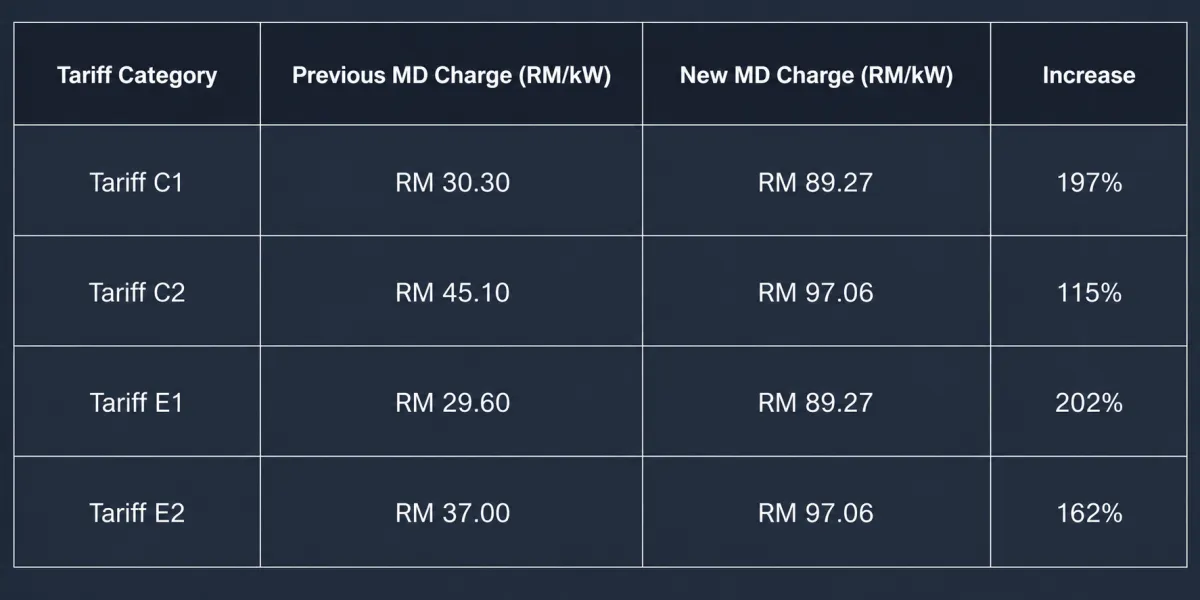
Consider this: under the old C2 tariff, a facility paying RM 100,000 a month in MD charges is now staring at a bill of nearly RM 200,000 — without consuming a single extra kilowatt. That's not just a price hike. It's a complete restructuring of how energy costs work in Malaysia, and businesses that don't adapt will keep absorbing the hit every single month.
Making matters more complex, TNB broke the Maximum Demand charge into two distinct line items from July 2025 onwards — the Capacity Charge and the Network Charge.
Maximum Demand: The Hidden Charge That's Quietly Draining Your Budget
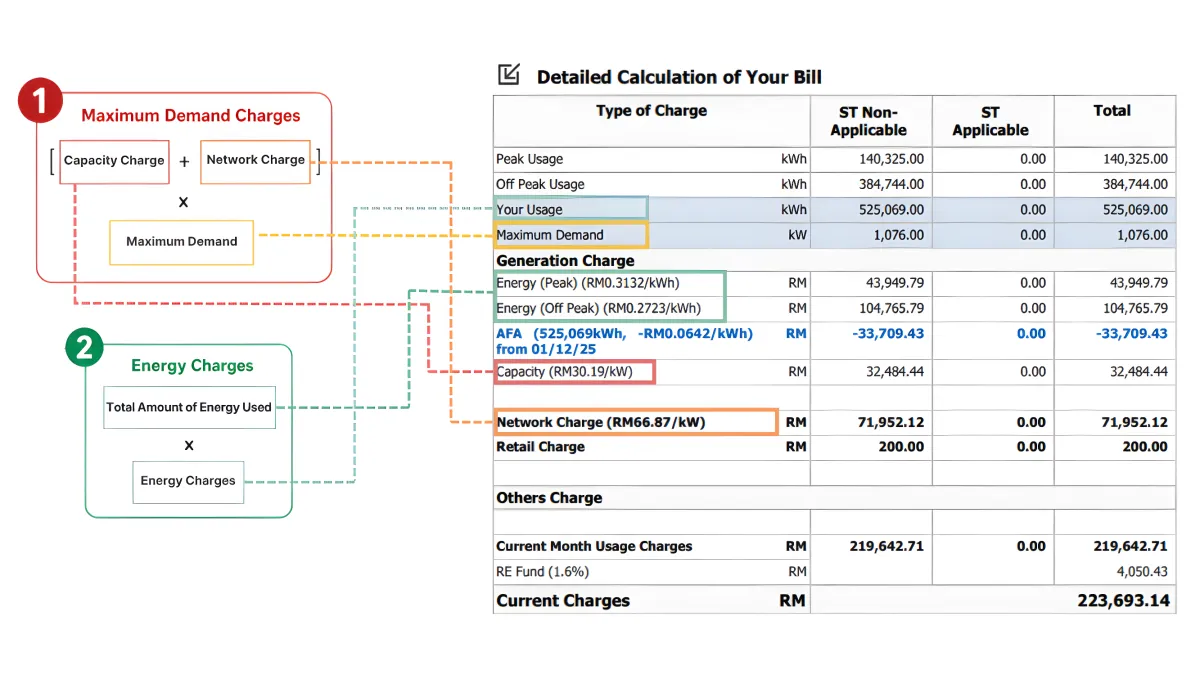
Maximum Demand (MD) is calculated based on the highest 30-minute electricity demand, not total monthly energy consumption.
Under TNB’s July 2025 tariff revision, peak hours for C&I users are 2:00 PM to 10:00 PM on weekdays.
A single power spike during peak hours can determine the MD charge for the entire month.
This can happen due to simultaneous equipment startup, production surges and overlapping high-load operations.
MD charges exist because TNB must maintain additional backup generation capacity to handle sudden demand increases.
Malaysia’s grid depends heavily on coal-based baseload power, which is efficient but slower to respond to rapid load changes.
During demand spikes, TNB activates more expensive backup sources such as oil-powered turbines.
As a result, one 30-minute surge can add tens of thousands of ringgit to a company’s monthly electricity bill.
BESS and Peak Shaving: The Solution to High Maximum Demand
A Battery Energy Storage System (BESS) works like a large-scale industrial power bank that stores electricity for later use.
The system charges during off-peak hours using grid electricity or renewable energy sources such as solar power.
During peak hours (2:00 PM – 10:00 PM on weekdays in Malaysia), the BESS discharges stored energy to reduce sudden demand spikes.
This process, known as peak shaving, helps stabilise Maximum Demand (MD) levels.
Key benefits of BESS include: lower MD charges and penalties, reduced overall electricity costs, and improved energy management & demand stability.
Unlike UPS systems or generators that only operate during outages, BESS actively manages energy usage daily through real-time monitoring and fast response control.
During demand spikes, TNB activates more expensive backup sources such as oil-powered turbines.
Modern lithium-ion BESS systems typically achieve energy efficiencies of around 80–90%, making them effective for commercial and industrial energy optimisation.
Why Choose Maqo Solar?

Demand Charge Reduction
Our smart storage systems help manage Maximum Demand (MD), lowering peak load charges and optimising electricity bills

Smart Energy Control
Integrated energy management systems use real-time data to optimise the dispatch of stored energy, improve load profiles and respond to demand spikes instantly

Flexible Business Models
It is a long established fact that a read will be distracted by the read able content of a page when looking at its layout.

Maximise Solar Value
Store excess solar energy generated during the day and use it during peak demand or high tariff hours — increasing solar self-consumption and cutting energy costs.

Zero CAPEX Battery Storage for Smarter Energy Savings
Deploy a fully financed Battery Energy Storage System (BESS) —cut peak demand, stabilize operations, and unlock guaranteed savings.
Energy Analysis & Site Assessment
We study your load profile, MD charges, and savings potential.
Maqo Invests & Builds
We finance, design, and install the BESS system at your site.
Operate & Maintain
Maqo manages performance, monitoring, and maintenance.
You Save from Day One
Enjoy predictable energy cost savings with zero hassle.
How It Works

Generate or Import Energy
Solar or grid power flows into the BESS when demand or tariffs are low.

Smart Charging & Storage
On-site intelligence stores energy efficiently, ready to be dispacthed based on your load profile.

Discharge When Needed
Use stored energy during peak hours, outages, or to manage deman charges-yielding financial and operational benefits
Other Options
Solar Solutions for Every Scale
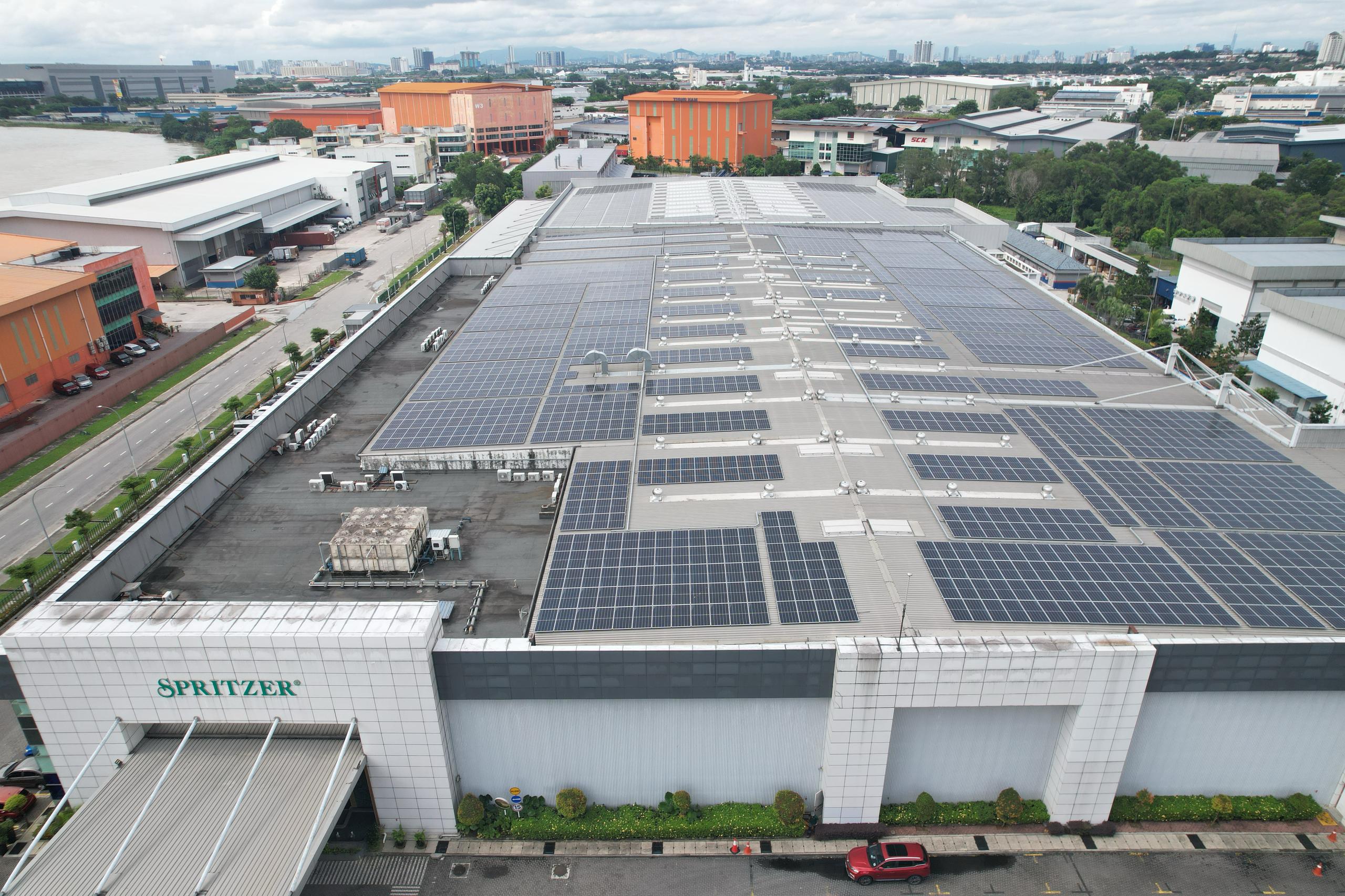
Commercial & Industry

Home Residential
Have questions? Get in touch!
Empowering sustainable living with world-class solar solutions — designed to cut your electricity bills and elevate your experience.
About
Contact us
Address
Copyright 2026.